AI Engineer Career Guide
Explore AI engineer jobs, salaries, and career paths. Stay current on generative AI, LLMs, AI agents, and AI development tools.
Top AI Engineering News, in 5 Minutes
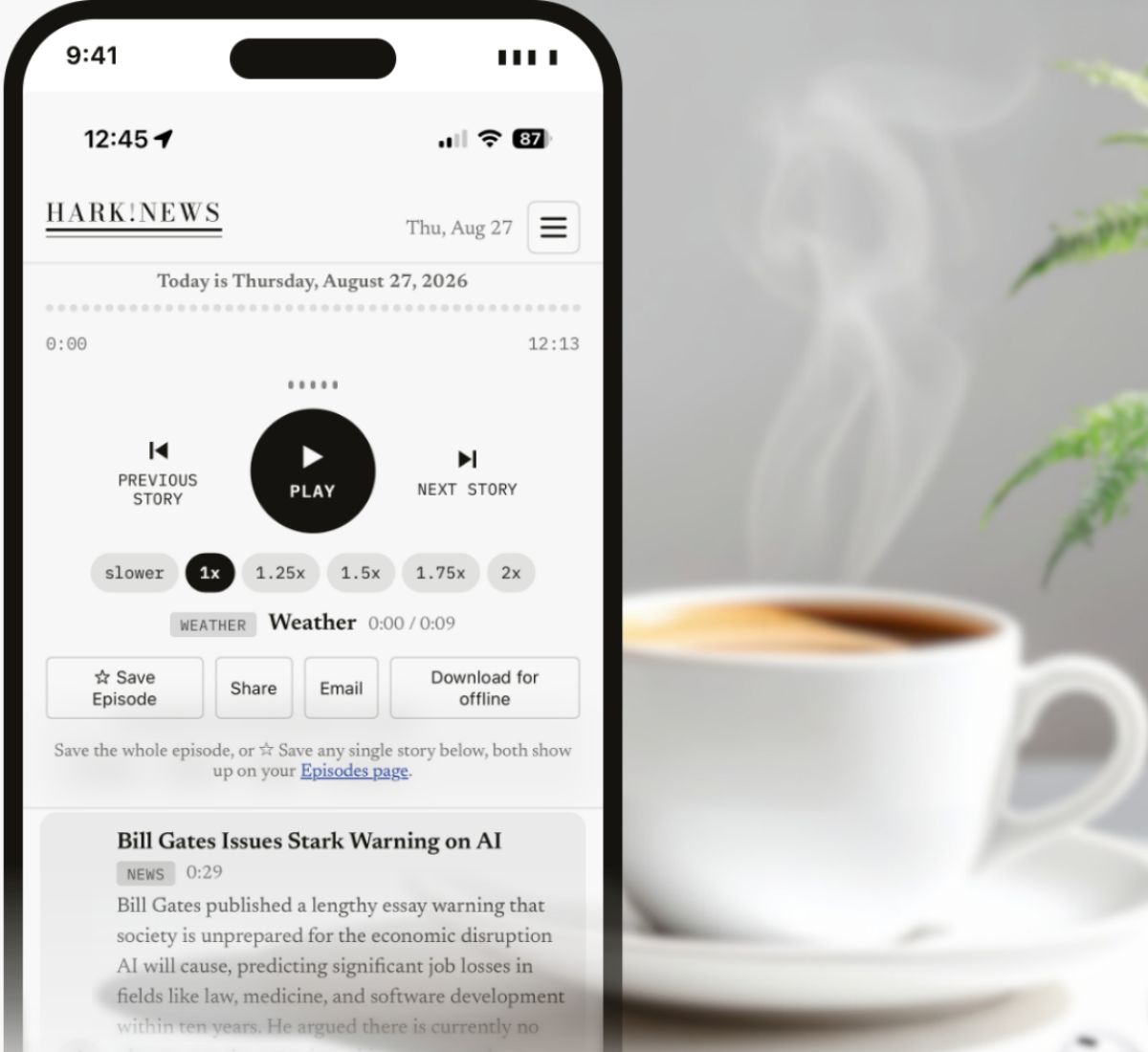
We handpick the best AI and engineering newsletters and distill the latest AI news and breakthroughs into a 5-minute audio briefing, texted to you every morning.
Try the AI Engineer Briefing, FreeFreeSee the 6 newsletters we handpicked


At a glance
AI Engineering at a Glance
There is no AI engineer occupation in the federal statistics. The Bureau of Labor Statistics lists ten computer and information technology occupations and none of them is this one, so the nearest anchor is software developers, SOC 15-1252: a $135,980 median in May 2025 across 1,717,800 jobs, growing ten percent to 2035, with the lowest tenth under $82,460 and the highest tenth above $214,670. The role extends well beyond prompt writing. It covers retrieval engineers who make search return the right passage, agent engineers who define tools and the permissions around them, evaluation engineers who build the harnesses that catch regressions, inference engineers who hold down cost and latency, and platform engineers who run the shared layer other product teams call. Pay tracks seniority and scope rather than any credential, and the adjacent federal anchors run from data scientists at $120,230 to computer and information systems managers at $175,140. Entry is usually a bachelor's degree and a shipped application rather than a graduate degree, which is the bar on the research side. The direction of travel is toward agents and tool use, where the engineering problem shifts from the quality of an answer to the safety of an action.
Key Industry Statistics
$135,980
Median pay for software developers (May 2025)US Bureau of Labor Statistics
1,717,800
Software developer jobs, the nearest federal countUS Bureau of Labor Statistics
$214,670
Top ten percent of software developer payUS Bureau of Labor Statistics
+35%
Projected data scientist growth, 2025 to 2035US Bureau of Labor Statistics
Common roles
- AI engineer
- Applied AI engineer
- Agent engineer
- AI platform engineer
- Senior AI engineer
- Staff AI engineer
Where they work
- AI-native startups
- Enterprise software companies
- Model providers
- Developer tooling teams
- Regulated industries
- Consultancies and agencies
What decides pay
- Production systems shipped
- Evaluation and tracing depth
- Agent and tool ownership
- Inference cost accountability
- Company stage and equity
Key Areas in AI Engineering
Retrieval & RAG
Making search return the passage the answer actually depends on.
Agents & Tool Use
Loops that act, and the permissions that keep them recoverable.
Evaluation Harnesses
Fixed test sets in continuous integration, scored the same way every run.
Context Engineering
Deciding what enters the window, and what is left out.
Inference Cost & Latency
The per-request price and wait that decide if a feature survives.
Guardrails & AI Security
Prompt injection, output handling, and limits on what the system may do.
AI Engineer Jobs & Salary
No federal occupation describes AI engineering, so this ladder uses the adjacent technical occupations AI engineers are counted among and work beside. All figures are median annual wages for May 2025 and exclude equity, which is a large share of total pay at well-funded companies.
Data scientists
$120,230
Software developers
$135,980
Computer and information research scientists
$140,300
Computer and information systems managers
$175,140
Source: US Bureau of Labor Statistics, Software Developers, Quality Assurance Analysts, and Testers, May 2025, accessed October 2026.
AI Engineering Career Paths
Four routes through the same constraint: a dependency you cannot open, priced per call and versioned by somebody else. The first fork is whether you serve users or the engineers building for them, and the later one is depth against leadership.
- Associate AI Engineer0 to 2 yearsOne feature, one evaluation set, and learning how often the model is wrong in practice.
- AI Engineer2 to 5 yearsA surface end to end, including the retrieval quality and the per-request cost.
- Senior AI Engineer5 to 8 yearsSeveral features, the quality bar between them, and the calls about what not to build.
- Staff AI Engineer8 years and upArchitecture across surfaces, and deciding which parts of the stack are worth owning.
Credential that fits No credential required; a shipped system and its numbers
There is no federal occupation code for an AI engineer. The work is counted variously among software developers, data scientists, computer and information research scientists and computer and information systems managers, and none of those medians include the equity that makes up a large share of pay at well-funded companies.
A Typical Day in AI Engineer Jobs
Five roles from a first model call to the architecture, ordered by how much of the day is somebody else's decision.
Associate AI EngineerEntry-Level · ApplicationsOne feature, one evaluation set, and the slow discovery of how often the model is actually wrong.
- 09:00Reading yesterday's flagged outputs, checking whether the bad ones have anything in common.
- 10:30Adding twenty real queries to the evaluation set, including the awkward ones nobody demos.
- 13:00Testing a chunking change, then discovering the win came from the reranker instead.
- 15:00Writing the failure modes up for the team in language that neither oversells nor panics.
- 17:00Reading what shipped today, and checking whether any of it touches your dependencies.
AI EngineerMid-Level · Product SurfaceA feature end to end, including the retrieval quality and the per-request cost nobody else watches.
- 08:30Quality dashboard: a regression since the provider rolled a point release nobody announced.
- 10:00Replaying last night's worst traces to find whether recall or ranking broke first.
- 12:30Cost review, where a popular feature is quietly approaching the point of being unaffordable.
- 14:30Pairing on the interface for when the system is unsure rather than wrong.
- 16:30Declining to add a model call to a form that validated perfectly well already.
Agent EngineerMid-Level · Agents and ToolsLoops that act, tool definitions that cannot be abused, and failures that have to be recoverable.
- 09:00Tightening a tool schema after an argument arrived in a shape nobody anticipated.
- 11:00Red-teaming retrieval with injected instructions hidden inside a perfectly ordinary document.
- 13:30Building the compensating step for a sequence that failed after the third action.
- 15:00Arguing for a confirmation prompt on an action that is cheap now and irreversible later.
- 17:00Scoring end-to-end task completion, because step-level scores looked fine and the task failed.
Senior AI EngineerSenior-Level · PlatformThe shared layer other teams call, and the quality bar they are expected to work to.
- 08:00Reviewing two teams' evaluation sets and finding they define a correct answer differently.
- 10:00Benchmarking a new model against the harness before anybody is allowed to route to it.
- 12:00Security review on an output path that reaches a privileged action without validation.
- 14:30Coaching an engineer through a retrieval fix instead of a model upgrade.
- 16:30Capacity and cost planning, because a launch next month triples inference volume.
Staff AI EngineerSenior-Level · ArchitectureBuild or buy, vendor lock-in, and what every system here is allowed to do unattended.
- 08:00Deciding whether to keep maintaining a component the platform now ships natively.
- 10:00Writing the standard for logging and permissions that every agent here must meet.
- 12:00Evaluating a second provider, mostly so one outage cannot take the product down.
- 14:00Killing a project, which is the decision this level is genuinely paid for.
- 16:30Hiring debrief, where the candidate demoed well and could not describe a failure rate.
JOB SEARCH
How to Become an AI Engineer in 2026
Whether you are adding your first model call to an application you already own, running a retrieval system real users complain about, or deciding what an agent may do without a human watching, the questions change at each stage. Pick yours.
Entry-Level
Ship Your First AI Feature
How to get in from an ordinary software job, what the pay anchors really are, and why one measured project beats five demos.
What you should know about the field
Where the numbers come from, what the entry bar is, and how this differs from machine learning engineering.
No Federal Occupation Code Covers AI Engineering
The Bureau of Labor Statistics lists ten computer and information technology occupations and none of them is AI engineer. Software developers, SOC 15-1252, is the nearest federal anchor, and it describes this work only loosely.
Sources: US Bureau of Labor Statistics, Computer and Information Technology OccupationsUS Bureau of Labor Statistics, Software Developers, May 2025
Software Developer Pay Is the Nearest Honest Benchmark
Software developers had a $135,980 median in May 2025, with the lowest ten percent under $82,460 and the highest ten percent above $214,670. The spread matters more here than the midpoint, because AI work usually sits in its upper half.
Source: US Bureau of Labor Statistics, Software Developers, May 2025
You Build on Models, an ML Engineer Builds and Serves Them
The dividing line is who owns the weights. The applied side typically asks for a bachelor's degree, the research side for a master's, which is the clearest published signal of how differently the two are staffed.
Sources: US Bureau of Labor Statistics, Software Developers, May 2025US Bureau of Labor Statistics, Computer and Information Research Scientists, May 2025
Vendor Certifications Churn Faster Than the Skills They Test
Microsoft has retired its Azure AI Engineer Associate certification. AWS is replacing its machine learning engineer exam with a version that adds Bedrock, retrieval-augmented generation architectures, agentic AI and responsible AI.
Sources: Microsoft Certified: Azure AI Engineer Associate (retired)AWS Certified Machine Learning Engineer Associate
Skills employers look for
What a team checks in someone who has not run an AI feature in production yet.
Ordinary Production Engineering
Timeouts, retries, idempotency, queues, observability and on-call. Most AI features fail on these rather than on intelligence, and this is where a bachelor's-level software background pays off immediately.
Source: US Bureau of Labor Statistics, Software Developers, May 2025
Building an Evaluation Harness
A fixed set of real cases, a scoring method written down before the results arrive, and a run in continuous integration so a regression fails a build rather than a user.
Retrieval That Actually Retrieves
Chunking, metadata filtering and reranking, plus measuring recall separately from answer quality so you can tell a search problem from a model problem. Cloud certification syllabuses now assume it.
Context Engineering Under a Budget
Deciding what enters the window and what stays out, since everything you add costs money and time. Google now names prompt and context engineering in its professional engineering exam.
Interview questions and answers
Questions put to a developer moving onto their first AI surface.
How would you evaluate a retrieval system that users say is wrong?
What they are looking for: Whether you can separate the stages instead of blaming the model.
Measure retrieval and generation separately. First check whether the right passage was even in the retrieved set, because if recall is the problem no prompt will fix it. If it was retrieved and the answer still missed it, that is a generation or context-ordering problem. I would build a small labelled set of queries with known correct sources, score recall at k, then score answer quality only on the cases where retrieval succeeded.
Make it yours: Name the two measurements. Candidates who jump to a bigger model have skipped the diagnosis.
When would you fine-tune instead of improving the prompt or the retrieval?
What they are looking for: Cost awareness and diagnosis, not knowledge of the three words.
By what is failing. Missing facts is a retrieval problem. Wrong format, tone or structure is usually a prompt problem, and these days often a structured-output problem. Fine-tuning is for behaviour you cannot specify in words, that is stable enough to be worth the labelled data and the ongoing maintenance, and where latency or cost pressure justifies a smaller tuned model. I would try them in that order, because it is also cheapest first.
Make it yours: Tie each option to a specific failure. Reciting all three is the weak answer.
What goes in your context window, and what do you leave out?
What they are looking for: Whether you think about tokens as a budget rather than a limit.
Instructions, the minimum state the task needs, retrieved passages ranked by a reranker rather than by raw similarity, and a couple of examples only if they change behaviour measurably. Out goes conversation history older than the task, boilerplate that never altered an output, and documents retrieved just because they cleared a threshold. Everything in the window costs money and latency, so each element should have earned its place in an evaluation run.
Make it yours: Say what you removed and what it saved. Addition is easy, subtraction is the skill.
How do you keep up when the tooling changes every week?
What they are looking for: Whether you have a routine, since nobody actually keeps up with all of it.
A short daily read for what shipped, one weekly source that explains why a result matters, and a builder-facing source for patterns other teams tried. Then a standing habit: when something relevant lands, run it against our own evaluation set rather than reading about it. That turns news into a decision, and it also tells me quickly when a component we maintain has just become a platform feature.
Make it yours: Describe the re-testing habit. Naming sources without a routine reads as a bookmark list.
Mid-Level
Own the Quality and the Bill
Running a feature whose failures are statistical, keeping retrieval honest, and holding the per-request cost that nobody else is watching.
What you should know about the field
What moves quality, cost and risk once the surface is yours rather than somebody else's.
LLM Application Security Has Its Own Published Taxonomy
The 2025 OWASP Top 10 for LLM Applications names prompt injection, sensitive information disclosure, improper output handling, excessive agency and unbounded consumption. Every one of those is an application-layer failure rather than a model defect.
There Is a Voluntary Federal Framework for AI Risk
NIST released its AI Risk Management Framework in January 2023, organised as govern, map, measure and manage, and added a Generative AI Profile in July 2024 for risks specific to generated output. Use of it is voluntary.
Sources: NIST AI Risk Management FrameworkNIST AI 600-1, Generative Artificial Intelligence Profile
The Occupations Around This Role Grow at Very Different Speeds
Software developers are projected to grow ten percent to 2035 across 1,717,800 jobs. Data scientists grow 35 percent across 275,600, and computer and information research scientists 22 percent across 38,600.
Sources: US Bureau of Labor Statistics, Data Scientists, May 2025US Bureau of Labor Statistics, Computer and Information Research Scientists, May 2025
Retrieval and Agents Are Now in the Certification Syllabus
AWS has added Bedrock, retrieval-augmented generation architectures and agentic AI to its engineering exam, and Google names prompt and context engineering and foundation models in its own. The application layer has been standardised.
Sources: AWS Certified Machine Learning Engineer AssociateGoogle Cloud Professional Machine Learning Engineer
Skills employers look for
What separates a convincing prototype from a feature that holds up under real traffic.
Retrieval That Actually Retrieves
Chunking, metadata filtering and reranking, plus measuring recall separately from answer quality so you can tell a search problem from a model problem. Cloud certification syllabuses now assume it.
Controlling Cost per Successful Outcome
Measuring price against outcomes rather than requests, because retries diverge the two. Unbounded consumption is listed among the top LLM application risks for exactly this reason.
Tracing and Replaying a Run
Capturing the retrieved documents, the assembled prompt, the tool calls and the output, so a bad run can be reproduced rather than described from memory.
Source: NIST AI 600-1, Generative Artificial Intelligence Profile
Defending Against Prompt Injection
Treating retrieved and user-supplied text as untrusted input, validating what comes back out, and never letting generated text reach a privileged action unchecked. It is the first entry on the OWASP list.
Interview questions and answers
Questions that test judgement under a real production constraint.
The feature is accurate but costs too much per call. What do you change?
What they are looking for: Commercial judgement, which is the fastest way to tell production experience from prototype experience.
Work out cost per successful outcome first, since retries make that diverge from cost per call. Then the cheap levers in order: trim the context, because most prompts carry passengers, cache the stable prefix, route easy cases to a smaller model and escalate only on a confidence or validation signal, and shorten the output. If it still does not clear after that, it is a pricing decision rather than an engineering one.
Make it yours: Order the levers by cost to implement. A list without a sequence reads as theory.
Walk me through a retrieval pipeline you built and where it failed.
What they are looking for: Honesty plus measurement. A pipeline with no failure story has not been in production.
A support assistant over help articles. Fixed-size chunking split procedures across boundaries, so the model got half a sequence of steps and confidently finished the rest. Recall looked fine because the right document was retrieved, just not the right part of it. We moved to structure-aware chunking, added a reranker, and measured at the passage level rather than the document level, which dropped our measured recall sharply and honestly.
Make it yours: Give the number that moved. A failure story without a measurement is an anecdote.
How do you keep a feature from regressing when the provider updates the model?
What they are looking for: Whether you have treated the model as a versioned dependency.
Pin the version where the provider allows it, and treat an upgrade as a change with its own review. Keep the evaluation set in continuous integration so a candidate version is scored before it ships, not after. Watch production signals that move before complaints do, like retry rate, edit rate and refusal rate. And keep enough traces that when something shifts you can replay the old inputs against the new model rather than guess.
Make it yours: Mention pinning and replay. Most answers stop at monitoring the dashboard.
How do you defend an agent against prompt injection arriving in retrieved content?
What they are looking for: Whether you treat retrieved text as untrusted input, which many candidates do not.
Assume anything retrieved is attacker-controlled. Keep instructions and data separated, so the model is never asked to decide which is which. Validate tool arguments against a schema instead of trusting the model's output shape. Keep permissions narrow so a successful injection cannot do much, and require confirmation for anything irreversible. Then log the full run so an attempt is visible afterwards. Prompt injection is the first entry on the OWASP list for a reason.
Make it yours: Lead with containment, not detection. Filtering alone is the answer that fails.
Senior-Level
Set the Architecture and the Limits
Deciding what the system may do unattended, where to accept vendor lock-in, and which parts of the stack are worth owning at all.
What you should know about the field
What seniority is accountable for once other teams depend on the layer you own.
Agents Need a Threat Model of Their Own
OWASP's Agentic Security Initiative published a separate threats and mitigations guide in February 2025, because planners, memory and tool interfaces fail in ways a single prompt and response never could.
There Is a Voluntary Federal Framework for AI Risk
NIST released its AI Risk Management Framework in January 2023, organised as govern, map, measure and manage, and added a Generative AI Profile in July 2024 for risks specific to generated output. Use of it is voluntary.
Sources: NIST AI Risk Management FrameworkNIST AI 600-1, Generative Artificial Intelligence Profile
Technical Leadership Is Where the Federal Pay Data Jumps
Computer and information systems managers, the category senior technical leadership generally falls into, had a $175,140 median in May 2025 across 685,800 jobs, projected to grow sixteen percent to 2035.
Source: US Bureau of Labor Statistics, Computer and Information Systems Managers, May 2025
LLM Application Security Has Its Own Published Taxonomy
The 2025 OWASP Top 10 for LLM Applications names prompt injection, sensitive information disclosure, improper output handling, excessive agency and unbounded consumption. Every one of those is an application-layer failure rather than a model defect.
Skills employers look for
What is expected of someone setting an architecture and a quality bar other engineers work to.
Designing Agent Permissions and Recovery
Narrow tools, validated arguments, the smallest permission that works, and a plan for a sequence that fails halfway. Excessive agency is a named risk, not a hypothetical one.
Building an Evaluation Harness
A fixed set of real cases, a scoring method written down before the results arrive, and a run in continuous integration so a regression fails a build rather than a user.
Controlling Cost per Successful Outcome
Measuring price against outcomes rather than requests, because retries diverge the two. Unbounded consumption is listed among the top LLM application risks for exactly this reason.
Governing Risk Across Several Teams
Setting one standard for evaluation, logging and permissions rather than letting each team invent its own. The federal framework's govern and measure functions describe exactly this work.
Interview questions and answers
Questions for someone expected to hold an architecture and an opinion.
How do you decide what an agent may do without a human confirming?
What they are looking for: Safety reasoning, which is what distinguishes senior candidates now.
Start from reversibility. Reading, drafting and anything undoable can run unattended. Anything that spends money, sends a message, deletes data or touches another person gets a confirmation, at least until the measured task completion rate justifies otherwise. Then design for partial failure, because a sequence can stop halfway and leave the world inconsistent, and log every step so a person can reconstruct what happened and why.
Make it yours: Mention partial failure and the audit trail. Most answers stop at a dialog.
How would you cut p95 latency on a multi-step agent?
What they are looking for: Systems thinking. Most of the answer is engineering, not model choice.
Find where the time goes first, because it is usually fewer steps than expected. Then parallelise independent tool calls instead of running the loop strictly in sequence, cache deterministic steps, stream the first useful output so the wait is perceived rather than endured, and cap the loop so a pathological run cannot hang. A smaller model for intermediate reasoning steps often helps more than a faster one for the final answer.
Make it yours: Separate real latency from perceived latency. Streaming is a lever people forget.
How do you keep a feature from regressing when the provider updates the model?
What they are looking for: Whether you have treated the model as a versioned dependency.
Pin the version where the provider allows it, and treat an upgrade as a change with its own review. Keep the evaluation set in continuous integration so a candidate version is scored before it ships, not after. Watch production signals that move before complaints do, like retry rate, edit rate and refusal rate. And keep enough traces that when something shifts you can replay the old inputs against the new model rather than guess.
Make it yours: Mention pinning and replay. Most answers stop at monitoring the dashboard.
The feature is accurate but costs too much per call. What do you change?
What they are looking for: Commercial judgement, which is the fastest way to tell production experience from prototype experience.
Work out cost per successful outcome first, since retries make that diverge from cost per call. Then the cheap levers in order: trim the context, because most prompts carry passengers, cache the stable prefix, route easy cases to a smaller model and escalate only on a confidence or validation signal, and shorten the output. If it still does not clear after that, it is a pricing decision rather than an engineering one.
Make it yours: Order the levers by cost to implement. A list without a sequence reads as theory.
Why AI Engineers Need to Stay Informed
New AI models, agents, and development tools are transforming how applications are built. Staying current on AI breakthroughs, emerging frameworks, and deployment technologies helps AI engineers build better products, solve technical challenges, and advance their careers.
Read more
The mechanical reason is dependency management. The layer you build on is versioned by somebody else and the layer you build with keeps absorbing the components you wrote, so reading the releases is how you avoid maintaining code that shipped as a setting last night.
The bottom line
AI Engineering Moves Fast. Stay Ahead.
Framework knowledge has a short half-life and measurement does not. Build the evaluation harness, the traces and the cost accounting first, because those are the parts of this job still worth something several model generations from now.
Stay Informed with Hark's AI Engineer Briefing
How it works
Curated from the best newsletters
Hark's editorial team handpicks the sources worth following. See how we rank
Distilled into one briefing
Six sources become a single five-minute read of what actually changed.
Texted to you every morning
It arrives before your first standup, at a time you choose.
Links back to the original
Every item names its source, so you can read the full piece when it matters.
The 6 AI Engineering Newsletters We Handpicked
TLDR AI
TLDR
- Free
- Daily (weekdays)
- 1.1M readers
TLDR's daily AI edition compresses research papers, product launches, and industry news into a five-minute weekday read for over a million subscribers.
Why AI engineers read it
Five minutes each weekday on releases, papers and tooling. For an engineer it reads mostly as a deprecation feed: the fastest way to notice that something you depend on changed underneath you.
More about this newsletter
TLDR AI compresses the day's AI research, product launches, and industry news into one-sentence summaries you can scan in minutes. It is the most technical of the big AI dailies, written with engineers in mind. Efficient, dense, and no-nonsense.
The Rundown AI
Rowan Cheung
- Free
- Daily
- 2M readers
Rowan Cheung's daily five-minute rundown of AI news and tools, teaching 2 million+ readers what just shipped and how to actually use it.
Why AI engineers read it
A daily account of what actually shipped, short enough to clear before standup. Useful here as early warning that a capability you scoped last sprint now exists as a platform setting.
More about this newsletter
Rowan Cheung's The Rundown AI is one of the largest AI newsletters, a daily digest of model launches, tools, and industry news built for a broad audience. Each issue turns the day's biggest release into a workflow you can try the same morning. Breadth over depth, delivered fast.
Best for: Anyone who wants to keep up with AI in five minutes a day. It's the largest AI newsletter for a reason: every issue turns the day's biggest model release or tool launch into something you can actually try that morning, no technical background needed.
See the other 4 newsletters
Latent Space
swyx & Alessio Fanelli
- Free
- 1-3x weekly (irregular)
- 197k readers
swyx and Alessio Fanelli's newsletter and podcast for AI engineers, covering models, tooling, and the craft of building with LLMs in production.
Why AI engineers read it
swyx and Alessio interview the people running production AI systems, which is the closest thing this layer has to a trade journal. Depth on agents, retrieval and evaluation that roundups never reach.
More about this newsletter
swyx and Alessio Fanelli write for the AI engineer: the person building products on top of models. The newsletter and podcast cover tooling, techniques, and interviews with the people shipping the frontier. It named and defined the AI engineering discipline.
Best for: AI engineers and technical builders who want depth on how frontier systems are actually built. swyx and Alessio go deep on architecture, tooling, and the people building the models, well beyond surface-level news.
The Batch
DeepLearning.AI (Andrew Ng)
- Free
- Weekly
Andrew Ng's weekly letter plus carefully explained AI news from the DeepLearning.AI team.
Why AI engineers read it
Andrew Ng's weekly letter explains why a result matters rather than that it happened. The best counterweight when launch coverage starts to feel like progress and you need the reasoning underneath.
More about this newsletter
The Batch, from Andrew Ng's DeepLearning.AI, covers the week's AI developments with an educator's clarity, opening with a personal letter from Ng himself. It is measured, credible, and accessible to practitioners and newcomers alike. AI news from one of the field's most influential teachers.
Ben's Bites
Ben Tossell
- Freemium
- Daily
- 170k readers
Ben Tossell's daily builder-focused AI newsletter tracking product launches, tools, and startup activity with a link-forward format.
Why AI engineers read it
Written for people shipping with these models rather than studying them. Strong on tools, patterns and what other builders tried last week, which is where practical ideas for your own stack come from.
More about this newsletter
Ben Tossell's daily is built for people making things with AI: product launches, tools, funding, and tutorials in a quick link-forward format. It grew up alongside the post-ChatGPT builder wave. The paid tier adds deep dives on how real companies use AI.
Best for: Founders, product people, and anyone building with AI. Ben Tossell's daily is written for people shipping things, pairing the news with the tools, launches, and practical angles a builder cares about.
Interconnects
Nathan Lambert (Substack)
- Freemium
- 1-2x weekly
- 79k readers
AI research newsletter by Nathan Lambert of the Allen Institute for AI, covering frontier-lab developments, open-source models, and post-training techniques without hype.
Why AI engineers read it
Nathan Lambert on post-training, open models and where the frontier actually sits. It keeps an application engineer honest about what the layer underneath can and cannot be made to do.
More about this newsletter
Essays on what is actually happening inside frontier AI labs, with a focus on open-source models, RLHF, and post-training. Lambert is a senior research scientist and post-training lead at the Allen Institute for AI (Ai2), so the analysis comes from someone who trains models for a living. A companion podcast accompanies many posts; paid subscribers ($15/mo or $150/yr) get extras like Discord access.
Best for: Readers who want frontier-model research from inside the arena. Working researcher Nathan Lambert reports on how leading models are trained and evaluated, technical but readable.
You May Also Like
- Software EngineersThe discipline this role specialises, and the commonest background for moving into it. Same deployment and reliability craft, applied to a dependency that answers differently each time.
- AI ProfessionalsBroader coverage of the research and model layer underneath these applications, for anyone weighing whether to work on the weights rather than on what gets built with them.
- Data EngineersPartners on the pipelines and document stores retrieval depends on, and a strong side door into this work, because most retrieval failures turn out to be data failures.
- AI Product ManagersWho decides what the feature should do and what failure rate is acceptable, with the evaluation and cost tradeoffs argued from the product side of the same table.
Frequently Asked Questions
Entry-Level
What is the difference between an AI engineer and a machine learning engineer?
Ownership of the weights. A machine learning engineer trains, tunes, serves and monitors models, so their work runs down into data pipelines, training runs and inference infrastructure. An AI engineer composes models they did not train into an application: retrieval, tool calling, context assembly, evaluation, guardrails and the cost and latency budget around all of it. One builds the engine, the other builds the vehicle. In practice the titles blur at small companies, and the honest test is whether you are accountable for a training run or for a product surface.
What is the difference between an AI engineer and a software engineer?
An AI engineer is a software engineer with a probabilistic dependency. Everything ordinary still applies: version control, testing, deployment, observability, on-call. What changes is that one component returns a different answer to the same input, costs money per call, can be slow in ways you cannot cache away, and is updated by a vendor on their schedule. So the testing becomes a held-out evaluation set rather than assertions, the error handling has to cover plausible wrong answers rather than exceptions, and the budget line for inference is yours.
Do you need a degree to become an AI engineer?
No federal occupation covers the title, so there is no licensing answer. The nearest anchor is software developers, SOC 15-1252, where the Bureau of Labor Statistics gives a bachelor's degree as the typical entry-level education. That is a useful signal of the bar: this is the applied side, and it does not assume the graduate degree that computer and information research scientists typically need. Plenty of working AI engineers arrive from ordinary software jobs without any AI credential, carrying a shipped application instead.
Can you become an AI engineer without knowing how to code?
Not really, and it is worth being plain about it rather than encouraging. The job is building and operating software: wiring APIs, handling failures, writing tests, reading traces, shipping and keeping it up. No-code tools will get you a working prototype and that is genuinely useful for proving an idea, but the problems this role exists to solve, retrieval quality, cost per request, agent safety, regression detection, all appear on the far side of the prototype. A better framing is that you do not need machine learning mathematics, which is different.
What programming languages should AI engineers learn?
Python first, because it is where the provider SDKs, retrieval libraries and evaluation tooling land first, and both the AWS and Google Cloud engineering certifications assume it. TypeScript second, since most of these features ship inside a web product and running model calls close to the interface removes a whole tier. After that it is whatever your backend already is, plus SQL, which matters more than people expect once retrieval starts involving filters and metadata rather than pure vector similarity.
What are the most important skills for AI engineers?
Evaluation first: a fixed set of real cases, scored, in continuous integration, so you can tell an improvement from a mood. Then retrieval done properly, including chunking, filtering and knowing when the problem is ranking rather than the model. Then context engineering under a token budget, agent permission and recovery design, and tracing a nondeterministic run well enough to replay it. Underneath all of it, ordinary production engineering, because most AI features fail on timeouts, retries and cost rather than on intelligence.
How much do AI engineers earn?
There is no AI engineer occupation in the federal data, so the honest proxy is software developers: a $135,980 median in May 2025, with the lowest ten percent under $82,460 and the highest ten percent above $214,670. Adjacent anchors are data scientists at $120,230, computer and information research scientists at $140,300 and computer and information systems managers at $175,140. AI work generally sits in the upper half of the developer spread, and at well-funded companies equity moves the total well past any of these medians.
What are the best entry-level jobs in AI engineering?
A backend or full-stack role on a team that already ships an AI feature is the most direct route, because you inherit a real evaluation set and real users instead of inventing both. Platform or developer-tools teams building internal AI infrastructure are underrated: you learn retrieval and cost control from the inside. Data engineering is a strong side door, since most retrieval problems are data problems. Solutions or forward-deployed engineering at an AI vendor exposes you to more production patterns in a year than most product teams see in three.
Mid-Level
Can software developers transition into AI engineering?
It is the commonest route in, and the transition is shorter than it looks. The engineering half of the job is the half you already have, and the new material is a short list: how these models behave, what retrieval does and does not fix, how to assemble context, how to evaluate output you cannot assert against, and what an agent is allowed to do. The reliable move is to add one AI feature to something you already own, build the evaluation set before the feature, and be able to describe what it measured.
What is the typical AI engineer career path?
Software or data engineer, then AI engineer on an application surface, then senior, then a fork between staff level depth and leading a team. The depth track runs toward owning the AI platform other product teams build on, where the questions are retrieval infrastructure, evaluation tooling, model routing and the inference bill. The leadership track runs through engineering manager to director, where the decisions are build or buy, vendor lock-in, and how much of the roadmap is allowed to assume the models improve. Lateral motion between application and platform is common.
What AI engineering projects should you include in your portfolio?
One project, built properly, beats five demos. Ship something with real retrieval over a corpus you did not clean, an evaluation set of at least a hundred real cases with the scoring method written down, and a short honest account of the failure modes and what you measured before and after each change. Add a cost per request and a p95 latency figure. If it uses tools or an agent loop, document what it may do unattended and what happens when step four fails after steps one to three succeeded.
Which AI engineering certifications are worth pursuing?
Treat them as a syllabus rather than a credential, and check they are still alive before you start: Microsoft retired its Azure AI Engineer Associate certification, which is a fair warning about the half-life here. The two that currently map onto this work are the AWS Certified Machine Learning Engineer Associate, whose updated version adds Bedrock, retrieval-augmented generation architectures, agentic AI and responsible AI, and Google Cloud's Professional Machine Learning Engineer, which now names prompt and context engineering and foundation models and suggests about three years of industry experience.
What should AI engineers know about large language models?
The operational mechanics rather than the mathematics. Output is generated token by token, so it varies between runs and streams naturally. The context window bounds what the model can consider, and everything you put in it costs money and time. Prompting, retrieval and fine-tuning fix different failures at very different prices. A confident wrong answer is a normal output, not a bug, which is why you design around it. And the model behind a version string can change, so your evaluation set is also your early warning system.
What is retrieval-augmented generation (RAG), and how do AI engineers use it?
Retrieval-augmented generation fetches relevant text at request time and puts it in the context window, so the model answers from your documents rather than from memory. In practice it is a search problem wearing an AI hat: chunking, embedding, filtering by metadata, reranking, and deciding what to do when nothing relevant comes back. It is the standard fix when the model lacks facts, and it is now mainstream enough to sit inside cloud certification syllabuses. Its failure modes are also search failure modes, which is why retrieval quality is measured separately from answer quality.
How do AI engineers build and deploy AI agents?
You give a model tools, a loop and a stopping condition, and from there the engineering is mostly containment. Define each tool narrowly, with validated arguments and the smallest permission that works. Decide what may run unattended and what needs a human, keeping anything irreversible in the second group. Design for partial failure, because a sequence can stop halfway and leave the world inconsistent. Log every step so a run can be reconstructed. OWASP publishes a separate agentic threats and mitigations guide precisely because planners, memory and tool interfaces fail in new ways.
What AI development tools and frameworks should engineers learn?
A provider SDK directly, before any framework, so you know what the framework is hiding. A retrieval stack, vector index plus a reranker, and enough search knowledge to debug it. An evaluation and tracing tool, which is the one most teams add last and should add first. A structured-output or tool-calling pattern you trust. Then orchestration only if the complexity earns it. The specific names turn over constantly, so learn the primitive each tool wraps: that part survives the next release and the framework often does not.
Senior-Level
How do AI engineers evaluate the accuracy and reliability of AI applications?
With a held-out set of real cases, fixed so results stay comparable, scored by a method written down in advance, and run in continuous integration like any other test. Measure the stages separately: retrieval recall, then answer quality, then end-to-end task completion, because an averaged score hides which stage broke. Track failure modes as named categories rather than a single number. Add adversarial cases deliberately. Then watch production, since the gap between your set and real inputs is where most quality claims quietly die.
How do you prepare for an AI engineer interview?
Bring one system you built and know its numbers: retrieval recall, task completion, cost per request, p95 latency, and what each of them was before your last change. Expect a design round on a retrieval or agent system, so practise explaining chunking, reranking and tool permissions out loud. Be ready to say when you chose not to use a model. Read the company's AI surface beforehand and arrive with a specific opinion about one failure mode in it. Honest failure stories with measurements beat polished ones without.
What are common AI engineer interview questions?
How would you evaluate a retrieval system that users say is wrong. The feature is accurate but costs too much per call, what changes. How do you stop prompt injection arriving through retrieved content. When would you fine-tune instead of improving the prompt or the retrieval. How do you keep a feature from regressing when the provider updates the model. How would you cut p95 latency on a multi-step agent. Nearly all of them test whether you can diagnose a stage rather than reach for a bigger model.
How are AI agents and generative AI changing AI engineering careers?
They are moving the hard part from output quality to action safety, and that is raising the seniority of the work. A wrong sentence wastes a moment; a wrong sequence of tool calls does something, and the errors compound across steps. So permission design, recovery from partial failure, auditability and end-to-end evaluation are becoming the skills that distinguish a senior engineer. At the same time the platforms keep absorbing the plumbing, which pushes the durable value of the role toward measurement, cost control and failure containment rather than framework fluency.
How can AI engineers advance into senior engineering or technical leadership roles?
By owning something other teams depend on. The usual step is from a feature to the shared layer underneath it: the evaluation harness, the retrieval service, the model routing and the inference budget. That is where judgement becomes visible, because the decisions are build or buy, where to accept vendor lock-in, and what quality bar the whole organisation works to. Computer and information systems managers, the federal category that senior technical leadership generally falls into, had a $175,140 median in May 2025 across 685,800 jobs growing sixteen percent to 2035.
How are LLMs and generative AI changing machine learning engineering?
They have moved a large share of the discipline from training bespoke models to adapting, serving and evaluating foundation models somebody else trained. The published syllabuses show it: the updated AWS machine learning engineer certification now covers Bedrock, retrieval-augmented generation architectures, agentic AI and responsible AI, and Google's professional engineering exam names foundation models and prompt and context engineering. The boundary with AI engineering is narrowing from both sides, but it has not closed. A machine learning engineer is still accountable for weights, training runs and inference infrastructure; an AI engineer is accountable for the application built on top of them.
What are the biggest challenges in building production machine learning systems?
On the machine learning side: data quality and drift, training and serving skew, reproducibility of a pipeline, and the monitoring that tells you a model has quietly degraded. On the application side the list is different, which is the distinction this page is about: a dependency versioned by a vendor rather than by you, retrieval that fails as search rather than as inference, cost that scales per request, and application-layer security. OWASP lists unbounded consumption and excessive agency among the top risks for exactly this reason. NIST's framework, organised as govern, map, measure and manage, is the usual scaffolding for handling both sets.
How can machine learning engineers advance into senior engineering or technical leadership roles?
Much the same way AI engineers do, by owning something other teams depend on, though the shared layer looks different: training and serving infrastructure, feature and evaluation tooling, model routing and the cost of inference at scale. Seniority arrives with the decisions that cannot be undone cheaply, which means build or buy, where vendor lock-in is acceptable, and what quality bar the organisation works to. The federal pay anchor is the same too: computer and information systems managers, where senior technical leadership is generally counted, had a $175,140 median in May 2025 across 685,800 jobs, projected to grow sixteen percent to 2035.
Get Tomorrow's AI Engineering Briefing
Six sources, one briefing, five minutes a morning. Enough to know whether the component you were about to build became an API parameter overnight.