AI Research Scientist Guide
Explore AI research scientist jobs, salaries, and career paths. Stay current on machine learning breakthroughs, LLMs, and emerging AI research.
Top AI Research & Breakthroughs, in 5 Minutes
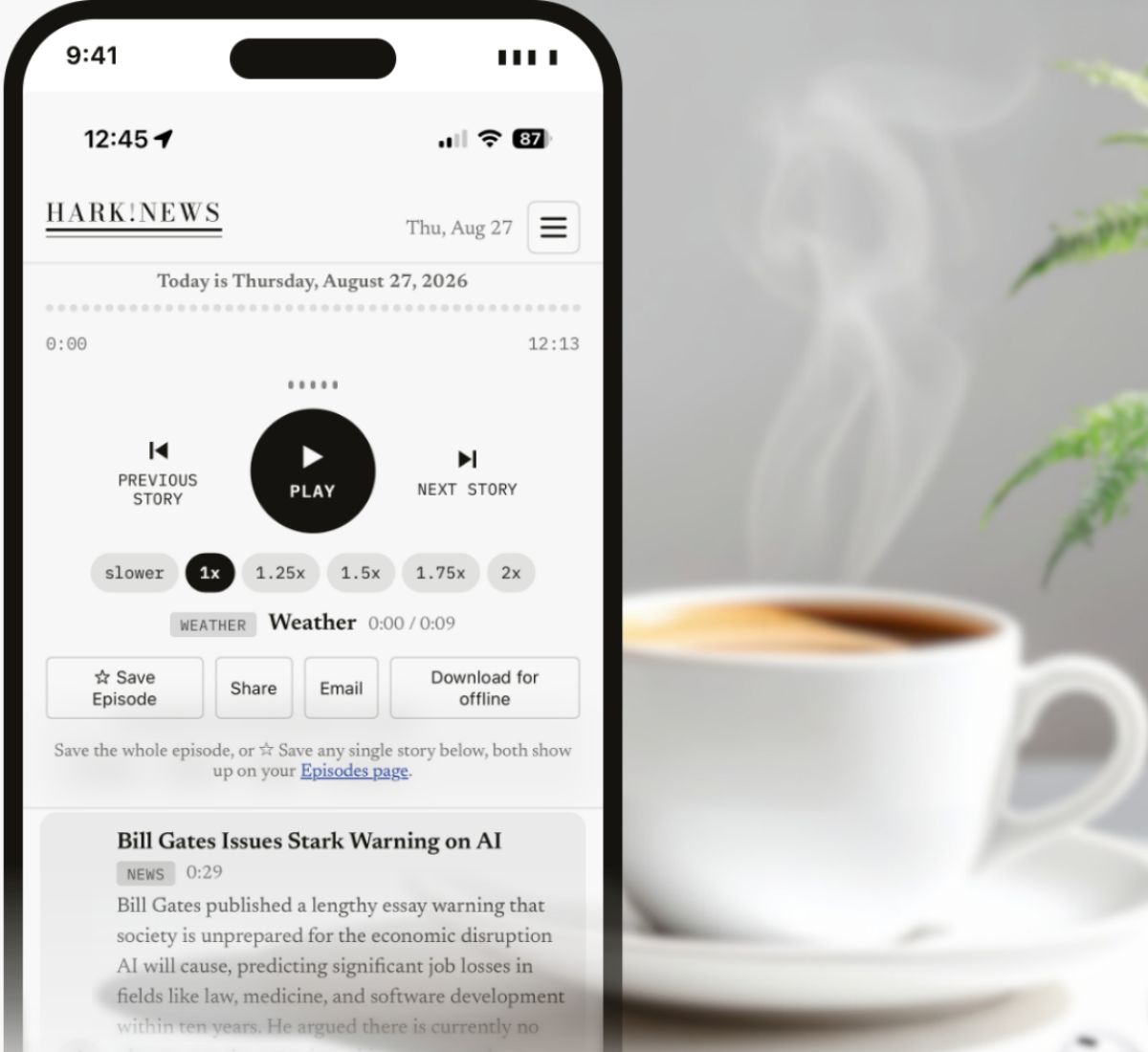
We handpick the best AI research newsletters and distill the latest research and model developments into a 5-minute audio briefing, texted to you every morning.
Try the AI Research Scientist Briefing, FreeFreeSee the 5 newsletters we handpicked

At a glance
AI Research at a Glance
The nearest federal occupation, computer and information research scientists, counts about 38,600 jobs at a $140,300 median and is projected to grow 22 percent to 2035. Treat that as an anchor rather than a headcount for AI research: the federal government employs 31 percent of that occupation and universities another 7 percent, while the labs doing most frontier model work sit in software publishing, where the same occupation's median is $211,270. The role also extends well beyond training large language models. It covers researchers who design and probe architectures, reinforcement learning people who shape how systems learn from feedback, evaluation and interpretability researchers who work out what a trained model is actually doing, data-centric researchers who build and clean the corpora, and systems researchers who make any of it run at scale. Pay rises with demonstrated results rather than tenure, and the strengths rewarded are broader than mathematics alone: careful experimental design, engineering solid enough to survive a cluster, and writing clear enough that a stranger can reproduce you. A master's is the typical entry credential and many employers prefer a doctorate, though a record of reproduced results and open-source work now opens doors a thesis once did. The direction of travel is industrial: nearly 90 percent of notable models in 2024 came from industry rather than academia.
Key Industry Statistics
$140,300
Median pay, computer and information research scientistsUS Bureau of Labor Statistics
+22%
Projected growth for that occupation, 2025 to 2035US Bureau of Labor Statistics
$211,270
Median for the same occupation at software publishersUS Bureau of Labor Statistics
~90%
Share of notable AI models from industry in 2024Stanford HAI AI Index 2025
Common roles
- Research intern
- Research engineer
- Research scientist
- Senior research scientist
- Staff research scientist
- Research director
Where they work
- Frontier AI labs
- University research groups
- Corporate research labs
- National laboratories
- AI-native startups
- Hardware and systems teams
What decides pay
- Publication and citation record
- Compute you command
- Lab stage and equity
- Scarcity of your specialism
- Industry versus academia
Key Areas in AI Research
Model Architecture
Designing and probing the structures that decide what a network can represent.
Reinforcement Learning
Shaping behaviour through feedback, where defining the reward is the hardest part.
Evaluation & Benchmarks
Measuring capability honestly, including the failures a headline score averages away.
Interpretability
Working out what a trained model is actually computing inside.
Data & Pretraining
Building the corpora, since what goes in bounds what can come out.
Systems & Scaling
Making training and inference run efficiently across very large clusters.
AI Research Scientist Jobs & Salary
There is no federal occupation code for an AI research scientist. The nearest anchor is computer and information research scientists, and it is an anchor rather than a measurement: the federal government and universities account for much of that occupation, while the labs doing frontier AI work sit in software publishing and pay far above the headline median. The rungs below are the adjacent occupations AI researchers are counted among. All figures are median annual wages for May 2025 and exclude equity.
Data scientists
$120,230
Software developers
$135,980
Computer and information research scientists
$140,300
Computer and information systems managers
$175,140
Source: US Bureau of Labor Statistics, Computer and Information Research Scientists, May 2025, accessed October 2026.
AI Research Scientist Career Paths
Four routes through the same work of producing a finding other people can build on. The first fork is whether you want a lab's compute or a university's freedom, and the later one is whether you go deeper or lead.
- Research Intern0 to 1 yearOne question, one experiment, and learning how a real training run actually fails.
- Research Scientist1 to 5 yearsYour own line of work, with the ablations and the negative results that come with it.
- Senior Research Scientist5 to 9 yearsA research direction, junior scientists on it, and the compute case you have to argue.
- Staff Research Scientist9 years and upBets across several directions, and the standard of evidence the lab works to.
Credential that fits No credential required; a reproduced result and a record
There is no federal occupation code for an AI research scientist. The role is counted variously among computer and information research scientists, data scientists, software developers and, at the leadership end, computer and information systems managers. None of those medians include equity, and the research-scientist figure is held down by the federal government and universities, which together employ a large share of that occupation.
A Typical Day in AI Research Scientist Jobs
Five roles from a first internship to a research organisation, ordered by how much of the day is somebody else's question.
Research InternEntry-Level · Industry LabOne question handed to you, and the slow discovery of how many ways a training run can fail.
- 09:00Checking overnight runs, two of which died and one of which died silently.
- 10:30Reading the preprint your advisor sent, and working out which table supports the abstract.
- 13:00Adding the ablation your mentor asked for, because the result currently proves nothing.
- 15:00Rerunning across more seeds and watching the effect shrink toward the noise floor.
- 17:00Writing the day up in the lab notebook, including what you broke and why.
Research EngineerEntry-Level · Applied ResearchMaking other people's experiments finish, and learning the constraints from the inside while you do.
- 08:30A scientist's job is three times slower since Friday and nobody changed the model.
- 10:00Profiling the data loader, which turns out to be the whole problem.
- 12:30Building an evaluation harness so three people stop scoring things differently.
- 14:30Capacity conversation, because next week's sweep needs more of the cluster than exists.
- 16:30Reviewing a colleague's training script and finding a seed that was never set.
Research ScientistMid-Level · Frontier LabYour own line of work, your own ablations, and the compute case you have to argue for.
- 08:00Results from last night: an improvement that is inside the variance of three seeds.
- 10:00Designing the ablation that would separate the architecture change from the data change.
- 12:00A paper posted this morning does roughly your experiment, better. Reading it properly.
- 14:30Arguing the compute case for the larger run, against three other projects.
- 16:30Drafting the method section while the details are still in your head.
Postdoctoral ResearcherMid-Level · AcademiaIndependent work on a fraction of the compute, with a faculty application quietly shaping every choice.
- 09:00Reviewing for a conference, carefully, because the system runs on people who do.
- 11:00Advising two doctoral students on experiments you would run differently.
- 13:00Rewriting the grant section that explains why this needs funding now.
- 15:00Scaling the method down until it fits the hardware the department actually owns.
- 17:00Rebuttal work: a reviewer misread the baseline and the clock is running.
Staff Research ScientistSenior-Level · Research DirectionWhere the compute goes, what counts as evidence here, and which promising thing to stop paying for.
- 08:00Portfolio review: which directions are compounding and which have been close for two quarters.
- 10:00Reading two teams' evaluations and finding they define the same capability differently.
- 12:00Hiring debrief on a candidate with strong papers who could not explain an ablation.
- 14:00Deciding to stop a direction, which is the call this level is genuinely paid for.
- 16:30Setting what the group must report before any result leaves the building.
JOB SEARCH
How to Become an AI Research Scientist in 2026
Whether you are deciding if the doctorate is worth it, moving across from engineering, running your first project of your own, or choosing where a group's compute goes, the questions change at each stage. Pick yours.
Entry-Level
Break Into AI Research
How people actually get in, what a doctorate is and is not worth, and why one reproduced result persuades more than a list of courses.
What you should know about the field
What the work pays, who gets hired, and where the research is being done.
No Federal Occupation Describes AI Research
The nearest anchor, computer and information research scientists, pays a $140,300 median across 38,600 jobs and is projected to grow 22 percent to 2035. Read it as a reference point, not a count of AI researchers.
Source: US Bureau of Labor Statistics, Computer and Information Research Scientists, May 2025
A Master's Is Typical and a Doctorate Often Preferred
The anchor occupation usually asks for a master's in computer science or a related field. Many employers prefer a doctorate, and the federal government will sometimes accept a bachelor's.
Source: US Bureau of Labor Statistics, Computer and Information Research Scientists, May 2025
Industry Now Produces Most of the Notable Models
Nearly 90 percent of notable models in 2024 came from industry, against 60 percent the year before, while academia remains the leading producer of the most highly cited papers.
Source: Stanford HAI, AI Index 2025, Research and Development
Most Doctorates in the Field Go to Visa Holders
Temporary visa holders earned 61 percent of United States doctorates in computer and information sciences in 2024, which makes immigration policy a direct input to research hiring.
Source: NSF NCSES, Doctorate Recipients from US Universities, 2024 data highlights
Skills employers look for
What a group checks in someone who has not run their own project yet.
Reading a Preprint Critically
Knowing which table actually supports the abstract, what the baseline was tuned against, and whether the comparison would survive the authors' own compute budget being halved.
Running Experiments That Survive a Cluster
Checkpointing, deterministic seeds, logging enough to diagnose a job that died at hour nine, and engineering good enough that the result is not an artefact of the harness.
Source: US Bureau of Labor Statistics, Software Developers, May 2025
Writing Work Somebody Else Can Reproduce
Hyperparameters, seeds, data provenance and the failed variants, written so a stranger can get your number without emailing you.
Source: NeurIPS Program Chairs, Reflections on the 2025 Review Process
Designing an Ablation That Isolates the Cause
Removing one thing at a time until the improvement is attributable, rather than shipping a number that six simultaneous changes produced together.
Source: US Bureau of Labor Statistics, Computer and Information Research Scientists, May 2025
Interview questions and answers
Questions put to a candidate for a first research or research engineering role.
Walk me through a result of yours and the ablation that proves it.
What they are looking for: Whether you can attribute an improvement to a cause, rather than report a number.
I changed the attention schedule and saw a two-point gain, but I had also changed the data mix, so the number meant nothing yet. I reran with each change alone, and the data mix carried almost all of it. The architecture change was worth a fraction of a point and I said so in the paper.
Make it yours: Name the thing that turned out not to matter. Attribution is the whole answer here.
A model beats the baseline on one seed. What do you do next?
What they are looking for: Statistical caution. The most common weak answer is to start writing it up.
Rerun across several seeds and look at the spread before I believe anything. If the variance covers the gap, there is no result. I would also check that the baseline was tuned as hard as my method, because an undertrained baseline is the easiest way to produce a finding that evaporates.
Make it yours: Mention tuning the baseline fairly. Interviewers notice when a candidate volunteers that.
Which recent paper changed how you work, and what did you distrust about it?
What they are looking for: Active reading. An entirely admiring answer suggests you have not reproduced anything.
One that changed our pretraining mix, which we adopted after reproducing it at a smaller scale. What I distrusted was the evaluation: the gains were concentrated on a benchmark the method was partly designed around, and the held-out tasks moved much less. We took the method and kept our own measurement.
Make it yours: Lead with what you reproduced. The distrust is only credible if you did the work.
How would you make your work reproducible by someone outside the lab?
What they are looking for: Whether you treat reproducibility as part of the work or as paperwork afterwards.
Pin the environment and the data version, publish seeds and the full hyperparameter sweep rather than only the winning configuration, and include the variants that failed. Then have somebody who was not on the project rerun it from the artefact before submission, because that is the only test that finds what you forgot.
Make it yours: Mention the internal rerun. Everyone claims reproducibility; very few describe checking it.
Mid-Level
Own a Research Agenda
Choosing the question rather than being handed it, defending a result that cost real compute, and knowing which venue the work belongs in.
What you should know about the field
What decides pay, pace and where your work gets read once the project is yours.
Your Employer Moves the Pay More Than Your Title
Inside the same federal occupation, the median at software publishers is $211,270 and at state colleges and universities $85,460. The research is comparable; the compensation is not.
Source: US Bureau of Labor Statistics, Computer and Information Research Scientists, May 2025
The Literature Does Not Wait for Peer Review
arXiv has carried over three million submissions in total, and AI publications rose from about 102,000 in 2013 to over 242,000 in 2023, reaching 41.8 percent of computer science output.
Sources: arXiv, Monthly Submission StatisticsStanford HAI, AI Index 2025, Research and Development
Conference Review Is Strained by Its Own Growth
NeurIPS took 21,575 main-track submissions in 2025 against 9,467 in 2020, accepted 24.52 percent and needed 20,518 reviewers. Acceptance is noisier than the prestige implies.
Source: NeurIPS Program Chairs, Reflections on the 2025 Review Process
Compute Is Growing Faster Than Any Other Input
Training compute for notable models doubles roughly every five months and training datasets roughly every eight, so a method that is cheap to try today was unaffordable a year ago.
Source: Stanford HAI, AI Index 2025, Research and Development
Skills employers look for
What separates running experiments from producing findings other people build on.
Designing an Ablation That Isolates the Cause
Removing one thing at a time until the improvement is attributable, rather than shipping a number that six simultaneous changes produced together.
Source: US Bureau of Labor Statistics, Computer and Information Research Scientists, May 2025
Building an Honest Evaluation
Measuring the capability you claim rather than the one that is easy to score, and reporting the failure modes separately instead of averaging them away.
Scaling and Systems Literacy
Understanding how memory, bandwidth and parallelism bound what you can try, because the compute frontier moves faster than any other input to this work.
Source: Stanford HAI, AI Index 2025, Research and Development
Writing Work Somebody Else Can Reproduce
Hyperparameters, seeds, data provenance and the failed variants, written so a stranger can get your number without emailing you.
Source: NeurIPS Program Chairs, Reflections on the 2025 Review Process
Interview questions and answers
Questions that test judgement under a real constraint.
A model beats the baseline on one seed. What do you do next?
What they are looking for: Statistical caution. The most common weak answer is to start writing it up.
Rerun across several seeds and look at the spread before I believe anything. If the variance covers the gap, there is no result. I would also check that the baseline was tuned as hard as my method, because an undertrained baseline is the easiest way to produce a finding that evaporates.
Make it yours: Mention tuning the baseline fairly. Interviewers notice when a candidate volunteers that.
How would you evaluate a capability nobody has a benchmark for?
What they are looking for: Whether you can build measurement rather than wait for one to exist.
Start by writing down what success would look like to a knowledgeable person, then collect real cases rather than invented ones and have experts label them, recording the disagreements because those define the standard. Hold the set fixed, add adversarial cases deliberately, and publish the set so the number is contestable.
Make it yours: Say you would release the evaluation. A private benchmark nobody can check is weak evidence.
Your training run diverges at large scale but not at small scale. Why?
What they are looking for: Practical systems knowledge, which separates a researcher from a reader of research.
Usually numerics or the schedule rather than the idea. Precision that was fine at small width overflows, the learning rate that was stable no longer is, and initialisation scaling that was implicit stops holding. I would bisect by scale, log gradient norms per layer, and check whether the first divergence is in one block or everywhere.
Make it yours: Give a diagnostic order. A list of possible causes without a plan is not an answer.
How do you choose what to work on when compute is limited?
What they are looking for: Research taste under a constraint, which is the hardest thing to assess and the most predictive.
I prefer questions where a small-scale experiment is genuinely informative about the large-scale answer, because those are the ones a limited budget can settle. Then I weight by what stays true if the models get better. Anything that is only interesting at frontier scale I would rather collaborate on than attempt alone.
Make it yours: Say which questions you decline. Prioritisation is proved by the thing you did not run.
Senior-Level
Set the Research Direction
Deciding where a group's compute goes, what counts as evidence inside the lab, and which promising direction to stop paying for.
What you should know about the field
What seniority is actually accountable for in a research organisation.
Evaluation and Safety Research Is Becoming Its Own Track
NIST released the AI Risk Management Framework in January 2023 and a generative AI profile in July 2024, and that kind of framework creates demand for researchers who measure risk rather than capability.
Your Employer Moves the Pay More Than Your Title
Inside the same federal occupation, the median at software publishers is $211,270 and at state colleges and universities $85,460. The research is comparable; the compensation is not.
Source: US Bureau of Labor Statistics, Computer and Information Research Scientists, May 2025
Conference Review Is Strained by Its Own Growth
NeurIPS took 21,575 main-track submissions in 2025 against 9,467 in 2020, accepted 24.52 percent and needed 20,518 reviewers. Acceptance is noisier than the prestige implies.
Source: NeurIPS Program Chairs, Reflections on the 2025 Review Process
The Adjacent Occupations Are Growing Quickly
Data scientists are projected to grow 35 percent to 2035 across 275,600 jobs, and software developers 10 percent. AI research sits inside that expansion rather than beside it.
Sources: US Bureau of Labor Statistics, Data Scientists, May 2025US Bureau of Labor Statistics, Software Developers, May 2025
Skills employers look for
What is expected of someone setting the standard of evidence others work to.
Framing a Research Question
Choosing a problem that is tractable with the compute you have and still matters if it works. This is the judgement that separates senior researchers.
Source: US Bureau of Labor Statistics, Computer and Information Research Scientists, May 2025
Building an Honest Evaluation
Measuring the capability you claim rather than the one that is easy to score, and reporting the failure modes separately instead of averaging them away.
Reviewing Other People's Work Well
The conference system runs on volunteer review and is visibly strained, so careful reviewing is both a professional duty and how the field learns your name.
Source: NeurIPS Program Chairs, Reflections on the 2025 Review Process
Scaling and Systems Literacy
Understanding how memory, bandwidth and parallelism bound what you can try, because the compute frontier moves faster than any other input to this work.
Source: Stanford HAI, AI Index 2025, Research and Development
Interview questions and answers
Questions for someone expected to have an independent research view.
How would you evaluate a capability nobody has a benchmark for?
What they are looking for: Whether you can build measurement rather than wait for one to exist.
Start by writing down what success would look like to a knowledgeable person, then collect real cases rather than invented ones and have experts label them, recording the disagreements because those define the standard. Hold the set fixed, add adversarial cases deliberately, and publish the set so the number is contestable.
Make it yours: Say you would release the evaluation. A private benchmark nobody can check is weak evidence.
How do you choose what to work on when compute is limited?
What they are looking for: Research taste under a constraint, which is the hardest thing to assess and the most predictive.
I prefer questions where a small-scale experiment is genuinely informative about the large-scale answer, because those are the ones a limited budget can settle. Then I weight by what stays true if the models get better. Anything that is only interesting at frontier scale I would rather collaborate on than attempt alone.
Make it yours: Say which questions you decline. Prioritisation is proved by the thing you did not run.
Tell me about a research direction you abandoned.
What they are looking for: Honesty and sunk-cost discipline, both rarer than technical skill.
A method that worked at small scale and flattened as we grew it. We spent a month on the hypothesis that it was an implementation problem, found one real bug, and the trend did not change. I wrote the negative result up internally so nobody repeated it, and moved on.
Make it yours: Say what you wrote down. An abandoned direction nobody recorded gets rerun by a colleague.
Which recent paper changed how you work, and what did you distrust about it?
What they are looking for: Active reading. An entirely admiring answer suggests you have not reproduced anything.
One that changed our pretraining mix, which we adopted after reproducing it at a smaller scale. What I distrusted was the evaluation: the gains were concentrated on a benchmark the method was partly designed around, and the held-out tasks moved much less. We took the method and kept our own measurement.
Make it yours: Lead with what you reproduced. The distrust is only credible if you did the work.
Why AI Researchers Need to Stay Informed
Breakthroughs in LLMs, reinforcement learning, and AI agents are reshaping artificial intelligence. Staying current on new research, model architectures, and emerging techniques helps AI researchers identify opportunities, improve experiments, and advance their careers.
Read more
The mechanical reason is cost. Compute and weeks are the two things a researcher cannot get back, and the commonest way to lose both is to run an experiment somebody else finished and posted while you were not reading.
The bottom line
AI Research Is Advancing Fast. Stay Current.
Reading is not an extra here, it is part of the method. A week away from the preprints is a week of risk that your next run answers a question somebody already settled, with a cleaner ablation than yours.
Stay Informed with Hark's AI Research Scientist Briefing
How it works
Curated from the best newsletters
Hark's editorial team handpicks the sources worth following. See how we rank
Distilled into one briefing
Five sources become a single five-minute read of what actually changed.
Texted to you every morning
It arrives before your first experiment of the day, at a time you choose.
Links back to the original
Every item names its source, so you can read the paper when it matters.
The 5 AI Research Newsletters We Handpicked
AlphaSignal
Lior Sinclair team
- Free
- Daily
- 300k readers
A technical daily digest for AI engineers covering new models, research papers, and trending repositories, complementing news-oriented AI briefings.
Why AI research scientists read it
A daily summary of the papers, model releases and repositories moving fastest, ranked rather than merely listed. The quickest way to see what the field decided mattered while you were inside a training run.
More about this newsletter
AlphaSignal is a technical daily for AI engineers, surfacing new models, papers, and trending repositories rather than business headlines. Issues are terse and built for scanning. The complement to news-driven AI dailies for people who ship code.
Best for: AI engineers who want a fast, technical daily. It surfaces the most important papers, models, and repos for people who build, with almost no fluff.
Import AI
Jack Clark
- Free
- Weekly
- 138k readers
Anthropic co-founder Jack Clark's weekly read on AI research and policy, summarizing the papers that matter and closing with a short speculative-fiction vignette.
Why AI research scientists read it
Jack Clark's weekly essay on where capability research is actually heading, including the policy and safety consequences most paper threads skip entirely. The best single source here for context rather than announcements.
More about this newsletter
Jack Clark, a co-founder of Anthropic, writes a weekly deep read on AI research with a policy and safety lens, summarizing the papers that matter and closing each issue with a short speculative-fiction vignette. It is technical, thoughtful, and long. Where AI-policy people find out what actually mattered this week.
Best for: Readers who want the research and its stakes, not the product news. Written by Anthropic co-founder Jack Clark, it's where AI-policy and safety people go to understand what genuinely mattered this week.
See the other 3 newsletters
The Batch
DeepLearning.AI (Andrew Ng)
- Free
- Weekly
Andrew Ng's weekly letter plus carefully explained AI news from the DeepLearning.AI team.
Why AI research scientists read it
Andrew Ng's weekly letter, which explains why a result matters rather than only reporting that it happened. A useful corrective when a benchmark number circulates with nobody checking the ablation.
More about this newsletter
The Batch, from Andrew Ng's DeepLearning.AI, covers the week's AI developments with an educator's clarity, opening with a personal letter from Ng himself. It is measured, credible, and accessible to practitioners and newcomers alike. AI news from one of the field's most influential teachers.
TheSequence
Jesus Rodriguez and Ksenia Se
- Freemium
- Several issues per week (free Sunday digest; paid Tue/Thu editions)
- 165k readers
Twice-weekly-plus ML and AI research deep dives written for engineers and practitioners.
Why AI research scientists read it
The free Sunday digest, pulling research papers, model releases and AI investment into one pass. Built for the weeks when you were too deep in experiments to read anything at all.
More about this newsletter
TheSequence, written by Jesus Rodriguez with co-founder Ksenia Se, distills machine learning research papers, framework releases, and AI industry moves into short technical reads. It is one of the most established practitioner-grade AI newsletters, read widely inside major labs and enterprises. The free tier includes a Sunday digest plus interviews and guest posts; the paid Edge tier (about $6/month) adds Tuesday and Thursday deep dives. Best for ML engineers and technical readers, not general audiences.
Best for: Practitioners who want structured machine-learning depth. It runs consistent, well-organized deep dives into research and ML engineering, for readers who want to go beyond the news.
Ahead of AI
Sebastian Raschka
- Free
- Monthly (roughly)
- 206k readers
Sebastian Raschka's roughly monthly, deeply technical magazine on LLM research and machine learning, walking practitioners through papers and architectures.
Why AI research scientists read it
Sebastian Raschka works through architectures and training methods with the code and the caveats attached. Closer to a worked tutorial than a news item, and the most technical pick in this bundle.
More about this newsletter
Sebastian Raschka, a machine learning researcher and textbook author, writes long technical walkthroughs of LLM research: new architectures, training techniques, and what the papers actually show. It reads like a well-taught graduate seminar. For practitioners who want the details, roughly monthly.
Best for: Technical readers who want machine learning explained properly. Researcher and textbook author Sebastian Raschka writes deep, careful pieces on how models work, ideal for engineers leveling up their fundamentals.
You May Also Like
- AI ProfessionalsColleagues who apply the methods researchers invent, covering the wider set of engineering and applied roles that sit between a published result and a system people use.
- Data ScientistsMeasurement and modelling against real business data, and the fastest-growing occupation on this page's salary ladder at a projected thirty-five percent through 2035.
- AI Product ManagersThe people who decide what a model is allowed to be wrong about, and the likeliest partners once a research finding has to become something shippable.
- Software EngineersWhere a great many AI researchers start, and the discipline that decides whether a training run survives contact with a cluster at three in the morning.
Frequently Asked Questions
Entry-Level
What does an AI research scientist do?
Produces new capability rather than applying existing capability. Day to day that means framing a question, designing and running experiments on models, building the evaluation that decides whether anything improved, and writing the result up so other people can reproduce it. Most runs fail, and a large part of the job is telling a real effect apart from a lucky seed. The output is a finding, not a feature.
How do you become an AI research scientist?
Two routes dominate. The academic one is a master's or doctorate in computer science or a related field, with published work and an advisor's network. The industry one is a research engineering role next to researchers, where you earn the question by first being the person whose experiments always run. Either way the artefact that gets you hired is a result somebody else reproduced, not a transcript.
Is AI research a good career?
The demand is real and the pay at the top is unusual: the same federal occupation pays a $140,300 median overall and $211,270 at software publishers. The case against is concentration and pace. Most frontier work needs compute only a few organisations have, the literature moves faster than anyone can read, and specific expertise decays quickly. The durable part is experimental judgement, which transfers across model generations.
What is the difference between an AI research scientist and an AI research engineer?
Who owns the question. A research scientist decides what to investigate, designs the experiment and is accountable for the claim. A research engineer makes that investigation possible: the training infrastructure, the data pipelines, the evaluation harness, the performance work that turns a week of compute into a day. The boundary is porous, many engineers co-author, and in small labs one person does both.
Do you need a PhD to become an AI research scientist?
Not always, but it is the typical path. For the nearest federal occupation a master's is the usual entry credential and many employers prefer a doctorate. What the doctorate really supplies is several supervised years of learning how to frame a question and survive negative results, which is hard to acquire elsewhere. People without one generally arrive through research engineering, open-source work, or a reproduction record that speaks for itself.
Can you become an AI researcher with a bachelor's or master's degree?
Yes, and it happens more in industry than in academia. The federal government will sometimes hire into the research occupation with a bachelor's, and industry labs hire on demonstrated results. The practical route is a research engineering or applied role beside a research group, then co-authorship, then your own project. It is slower than a doctorate for the first few years and not obviously slower after that.
What are the best entry-level jobs in AI research?
A research internship at a lab, which is the single most direct route and the most competitive. Research engineering, where you learn the constraints from inside and are present for every result. A predoctoral or research assistant position in a university group, which buys supervision and publications. Evaluation and benchmarking roles, which are underrated: learning to measure honestly is the skill the rest of the job rests on.
How much do AI research scientists earn?
There is no occupation code for the role, so the anchor is computer and information research scientists at a $140,300 median for May 2025. That figure understates industry AI research badly, because the federal government employs 31 percent of that occupation and universities another 7 percent. Within the same occupation, software publishers pay a $211,270 median and state universities $85,460. Frontier labs sit above all of it once equity counts.
Mid-Level
What skills do you need to become an AI research scientist?
Experimental design above all: the ablation that attributes an improvement to a cause, and the seeds that show it was not noise. Enough engineering that your job survives a cluster. Evaluation that measures the claim rather than the convenient proxy. Critical reading, since most of the field arrives as preprints. And writing clear enough that a stranger can reproduce you, which is what turns a run into a result.
What programming languages and machine learning frameworks should AI researchers learn?
Python is the working language of the field, with one deep learning framework known well enough to debug rather than merely use, and enough C++ or CUDA to read a kernel when the profiler points at one. Add distributed training, experiment tracking and the data tooling your lab runs on. The specific frameworks change; the useful commitment is to one stack deep enough to diagnose it.
How much mathematics do AI research scientists need to know?
Enough to reason about why a method works, which in practice means linear algebra, probability and statistics, and multivariable calculus for optimisation. Statistics earns its place daily, because distinguishing a real gain from seed variance is a statistical question people get wrong constantly. Measure theory and heavy theory matter in some subfields and almost never in others. Depth beats breadth in whichever area you actually work.
What is the typical AI research scientist career path?
Intern or research engineer, research scientist, senior, then staff or principal, with a fork between going deeper as an individual contributor and leading a group. In academia it is doctorate, postdoc, assistant professor, tenure. Movement between the two is common in one direction and harder in the other. Lateral motion across subfields is normal, because the experimental method transfers better than the domain knowledge.
How do you gain AI research experience without a PhD?
Reproduce published work and publish the reproduction, including where your numbers differed, because that is rarer and more useful than a new idea. Contribute to open-source model and evaluation projects where the maintainers are researchers. Take a research engineering role and make yourself the person every experiment runs through. Enter shared benchmarks and write up the method honestly. Each produces the same thing: evidence somebody can check.
How can software engineers transition into AI research?
Start from the advantage you already have, which is that most research code is fragile and most researchers want their experiments to run faster. Join a research group as an engineer, make the infrastructure good, and earn co-authorship. In parallel, reproduce a paper a quarter and close the gaps in statistics and optimisation that the reproductions expose. The transition is usually two to three years, and the engineering never stops being useful.
What is the difference between an AI research scientist and a machine learning engineer?
Research scientists create methods; machine learning engineers deploy them. The researcher is accountable for whether a claim is true, works on an uncertain timeline, and is measured in findings. The engineer is accountable for whether a system works in production, with latency, cost, monitoring and retraining to own. The research scientist occupation anchors at a $140,300 median while software developers anchor at $135,980, which understates how differently the two are paid at the top.
What AI research specializations offer the most career opportunities?
Evaluation and interpretability, because every lab now needs to say what its model is doing and nobody has enough people who can. Reinforcement learning and post-training, which is where most recent capability gains have come from. Efficiency and systems, since compute is the binding constraint. Multimodal and embodied work. Safety research, where the arrival of frameworks like the NIST risk framework turned a research interest into a staffed function.
Senior-Level
How do you build a strong AI research portfolio?
Depth in one line of work beats scattered projects. Pick a question, publish the result, publish the reproduction of somebody else's result that informed it, and release the code and the evaluation so people can argue with you. Open-source contributions to tools researchers actually use are worth more than their size suggests. A blog that explains a method correctly is read by more hiring managers than a workshop paper.
How important are research publications for AI research scientist jobs?
They are the field's main currency and an imperfect one. Top-venue papers open doors, especially in academia, and acceptance is noisier than the prestige implies: NeurIPS took 21,575 main-track submissions in 2025 and accepted under a quarter of them with 20,518 reviewers. Industry labs increasingly weight demonstrated results, influential open-source work and citations over raw venue count, so a reproduced and widely used method can outrank a thin list.
Which AI conferences should aspiring researchers follow?
NeurIPS, ICML and ICLR for general machine learning, ACL and EMNLP for language, CVPR and ICCV for vision, and the specialist venues for your subfield. Follow them, but do not wait for them: most work appears as a preprint months before a decision, and the scale is now enormous, with NeurIPS alone moving from 9,467 submissions in 2020 to 21,575 in 2025. The conference is where you meet people; the preprint is where you read.
How do you prepare for an AI research scientist interview?
Be able to walk through one result of your own in complete detail, including the ablation and the variant that failed, because that conversation is the interview. Read the group's recent papers and have a genuine question about one. Expect a live research-design exercise and practise thinking aloud. Then prepare an honest account of a direction you abandoned, since sunk-cost discipline is something they are quietly checking.
What are common AI research scientist interview questions?
Walk me through a result and the ablation that proves it. A model beats the baseline on one seed, now what. How would you evaluate a capability with no benchmark. Your run diverges at scale but not at small scale, why. Which recent paper changed how you work, and what did you distrust about it. How do you choose what to work on when compute is limited. Almost all of them test attribution rather than recall.
What is the difference between academic and industry AI research?
Compute and freedom, traded against each other. Industry has the hardware, which is why nearly 90 percent of notable models in 2024 came from industry against 60 percent the year before, and in exchange it decides which questions the organisation cares about. Academia chooses its own questions with far less hardware, which pushes it toward theory, analysis and interpretability, and it remains the leading producer of the most highly cited papers. The pay gap is visible inside a single federal occupation: a $211,270 median at software publishers against $85,460 at state colleges and universities. Movement from academia into industry is routine; the other direction is considerably harder.
How are LLMs, reinforcement learning, and AI agents changing AI research careers?
They have moved the centre of gravity toward post-training, evaluation and systems. Most recent capability gains have come from reinforcement learning and post-training rather than new architectures, agents have made end-to-end measurement a research problem in its own right, and compute is now the binding constraint, doubling roughly every five months for notable models while training datasets double about every eight. The career effect is that evaluation, interpretability and efficiency work has gone from a sideline to a staffed function, and that a researcher who cannot run things at scale is confined to a shrinking set of questions.
How can AI research scientists advance into senior research or research leadership roles?
Through evidence rather than tenure. The sequence is a line of work other groups build on, then accountability for other people's research calls, then a budget: a research manager with a handful of scientists, a director choosing between directions, and eventually the person who decides what the lab pursues at all. The skills that stop being optional are compute allocation, hiring, and stopping a promising direction that has been nearly ready for two quarters. Pay follows the occupation the role gets counted in, and computer and information systems managers sit at a $175,140 median across 685,800 jobs, projected to grow 16 percent to 2035.
Get Tomorrow's AI Research Briefing
Five sources, one briefing, five minutes a morning. Enough to know which of last night's preprints your next experiment has to account for.